

Thank you for Subscribing to Med Tech Business Review Weekly Brief

BD
Dipak Duggal, Global Director of Medical Affairs
Improvising Medtech Sector By Utilizing Technology
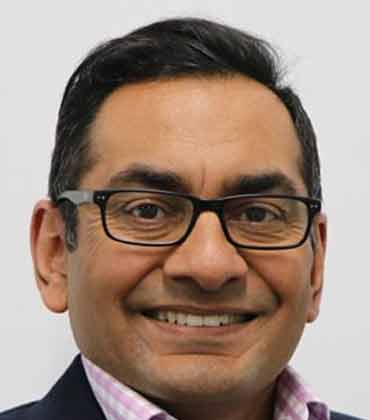
Dipak Duggal
As a Global Director of Medical Affairs, Dipak Duggal leads the medical affairs function for BD dispensing in Europe and Internationally. He is also responsible for external professional relationships with key opinion leaders (KOL) and evidence generation and provides clinical input and support to R&D and regulatory functions.
Could you talk about some of the major challenges that have been prevailing in the market lately? The major issue is the backlog of cases since no one likes to be put on hold; even cancer diagnosis and other treatments were delayed during Covid. Getting patients back up to being seen treated, and on paths within the widely agreed two-week targets is the top priority. Unfortunately, this is where we were before the pandemic hit. There needs to be a significant effort made to get people through the system, but I believe we are struggling to fulfill those standards. Another major challenge is the burden of medication errors. According to the report, up to 270 million drug mistakes occur each year and about 20% of these result in serious injury or death. Thus, home healthcare includes primary, secondary, and tertiary care as well as patient care. Therefore, attempting to lower that amount is a significant problem. A significant amount of money has already been spent on technology, and some big players in the market are working to integrate electronic medication records into hospital IT systems as a whole. However, these efforts are not focused on identifying the causes of errors throughout the entire medication management process. I believe people need to understand the advantages of standardizing processes through automation because consistency comes from standardization, which reduces errors. Everyone is aware that being a part of a health system includes experiencing clinical diversity. Every patient is unique, but unjustified variation is what leads to many blunders. How has the industry tackled those challenges? Are there any new trends that have to emerge in the market lead to help tackle these pain points? There was a transition, and it happened very quickly. Hospitals and health systems had to figure out how to get medications to the right places and to make sure that technology could be utilized to help an enormous problem of people who were of handling the large number using the systems. A large number of patients were treated in ICUs. There was a need to understand where in the healthcare system they offer medications for ICUs and how to get them to locations where the patients were. It may take longer than you expect. I think the pace of change is something that people were crying out to be maintained. They don’t want to return to the previous system of working, in which requesting a meeting required waiting for ten months. Since health systems seek to transition to a more paperless environment, I believe that fits in well with the digital transformation agenda. As a result, I believe that more and more data will be able to be transferred electronically. Interoperability and system integration is the issue around that. There are many requests for our systems to be compatible with other hospitals’ EMRs, hospital IT systems, or prescribing systems. We also need to understand that controlling drug shortages continues to be challenged due to other geopolitical events happening in the world. "I believe people need to understand the advantages of standardizing processes through automation because consistency comes from standardization, which reduces errors" Another important topic is antimicrobial resistance, specifically how we may avoid overusing very beneficial antibiotics. As more and more medications enter the market, we need to manage the huge numbers of new and different medications and make sure that the best medications are chosen for management based on their efficacy and costeffectiveness. From a clinical standpoint, there is a strong imperative that can be accomplished by implementing solutions and technology to truly help, especially given the enormous amount of job openings that we are witnessing. How do you envision the future of this pace for the next couple of years down the line? In my opinion, the US is setting the bar for the adoption and establishment of a different kind of technology. In terms of hospital pharmacy and medication administration automation, they have been pioneers, but now the rest of the world is catching up. However, that necessitates a specific component of a local field. Workflow varies from one nation to another and from one location to another. Thus, you must first understand how the various occupations operate. For instance, the hospital pharmacy in the UK closely mimics the US model. For example, we might have up to 60 pharmacists working in a clinical ward-based pharmacy, or 50% of the total workforce. Therefore, the emphasis is considerably more on supply and procurement than on therapeutic care. However, that’s currently altering. They do rely on solutions back in their departments that automate some of the old tasks that they had to undertake in order to free up time for those pharmacies to become clinically involved. Therefore, I believe in creating a vision for the future of linked medicine management, deciding how connected we want it to be, and making sure the supporting infrastructure is in place to realize that vision. It’s not only about spending money and putting in medication management systems but about modifying people’s perspectives and shaping some markets so that what works best in particular nations may still function best with some localized adjustments. Every time I visit a hospital in any other nation, the first thing they tell me is that their facilities are unique. But if you travel the world, 80% of what you see in hospitals is probably the same. According to the 80:20 rules, you should concentrate on the 20% difference and make sure you do that part perfectly because the remainder is essentially the same everywhere else. What would be your single piece of advice for upcoming professionals? I believe it’s important to keep an open mind to potential innovations and ideas but also not be afraid to express your demands and requirements because we can’t complete a project without them. Therefore, use every chance you get to interact with your industry partners at trade exhibitions, conferences, and congresses and genuinely paint them a picture of how things are. It’s all about mutual understanding to produce the best results.The articles from these contributors are based on their personal expertise and viewpoints, and do not necessarily reflect the opinions of their employers or affiliated organizations.
