

Thank you for Subscribing to Med Tech Business Review Weekly Brief

CBET Director Cyber Security | HIPAA
Eddie Myers, HCISPP
Ushering in a New Era of Medical Device Security
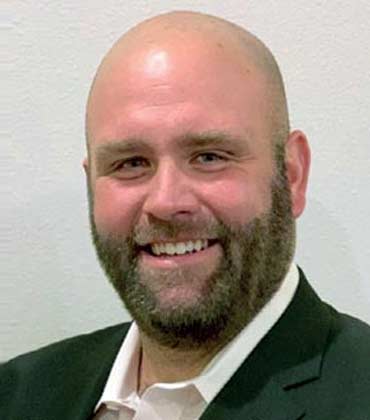
Eddie Myers
Eddie Myers serves as the director of cybersecurity for Crothall’s Healthcare Technology Solutions division (HTS) and oversees national cybersecurity programs and initiatives for the HTS service line and its clients. Having worked in the healthcare sector for over 18 years, Myers has gained unique insights into healthcare information technologies, picture archiving and communication systems (PACS), and healthcare technology management. Myers and his team offer a variety of services, including project management, IT consulting, technical support, and security management services for clinical field operations.
Starting his career as a senior field service technician at CHRISTUS Health, Myers handled various responsibilities, including PACS administrator and program manager of clinical technology services, before joining Crothall Healthcare. During his tenure as a program manager at CREST services, he had the opportunity to learn more about HIPAA, which piqued his interest in cybersecurity. In an interview with Healthcare Tech Outlook magazine, Myers sheds light on some of the challenges prevailing in the medical device security space and how companies can convert those challenges into unique opportunities. What are some of the challenges that medical device security companies face today? One of the major challenges medical device security organizations face today is educating and getting their clients’ IT departments on board with an understanding that there is a substantial difference between handling medical devices and typical IT controls. Patching a medical device is a complex process as it requires OEMs to find and approve the patches. Forming strategic partnership with a company named Asimily helped Crothall Healthcare overcome this prevailing challenge in the medical device security space. Asimily’s passive asset discovery tools collect real-time insights into hospital traffic and build out unique device profiles for medical devices. Asimily brings Crothall Healthcare clients laser-sharp visibility into their connected medical device profiles. Asimily’s threat detection tools assess risks, prioritize actions, and develop mitigation strategies to reduce security vulnerabilities through state-ofthe- art machine learning and help Crothall Healthcare walk away from conventional methods of relying on computers to control medical devices, figure out the operating system and current patches, and reach out to the OEMs for the MDS. Can you please walk us through some of the latest projects you have been working on? Rolling out Asimily to a good chunk of our clients gives us real-time visibility into the client’s data, which helps us build out unique device profiles and match them up with our CMMS. In addition, it enables us to differentiate between identical devices in the same organization. Conducting a thorough gap analysis with Asimily in our CMMS will lead to ultimately integrating these device profiles into our CMMS.Crothall Healthcare, along with its partners, proactively follows numerous cybersecurity organizations and websites, such as CISA, that monitor device vulnerabilities. Our strategic partner, Asimily, keeps an eye on threat intelligence websites and adds the latest trends to their algorithm
The articles from these contributors are based on their personal expertise and viewpoints, and do not necessarily reflect the opinions of their employers or affiliated organizations.
