


Thank you for Subscribing to Med Tech Business Review Weekly Brief


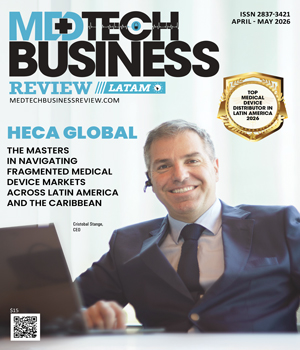
 Cristobal Stange, CEO
Why do fragmented regulatory and healthcare systems challenge medical device expansion in Latin America?
For medical device manufacturers, Latin America and the Caribbean remain a mosaic of distinct healthcare operating environments. Each jurisdiction is defined by independent regulatory systems, reimbursement structures, import-export requirements, fluctuating currencies, clinical practices, and healthcare protocols. Manufacturers face the persistent challenge of navigating fragmented systems with different marketing strategies and inconsistent execution standards.
Heca Global, a medical device distributor, transforms fragmentation into strategic leverage to bring medical device manufacturers’ innovative products and breakthrough technologies to the market. It creates economies of scale across dispersed Latin American micro-markets.
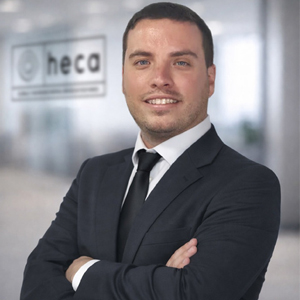 Alan Fenoglio, Commercial Manager
“We have mastered how to serve in a complex landscape. Manufacturers trust us because they see our commitment. They see how our diversified geographical coverage translates into unique economies of scale with a genuine local expertise,” says Cristobal Stange, CEO.
The model was not incidental. Prior to starting the company in 2009, while supporting multi-country operations at Medtronic in Europe and based in Switzerland, Stange saw how coordinated regional execution could outperform fragmented local efforts.
”The European landscape is similar to Latin American,” Stange adds. “Multiple jurisdictions, multiple settings. But on the other side medical devices are so clinically deep, so technically complex, that it pays off to have a centralized high calibre team.”
With that vision, he set out to build a geographically diversified platform across Latin America. Despite its bureaucratic dispersion and structural complexity, the region was a deliberate choice and formed the founding strategy.
A Model Built End-To-End
How does Heca Global coordinate commercialization, education, and operations across dispersed markets?
An integrated operating partner for manufacturers, Heca Global ensures clinical education, commercial strategy and operational precision work together. Its model is built on owning execution end-to-end, so regional complexity can be managed without compromising standards across the commercialization lifecycle.
“We own delivery vehicles as they are the ones facing customers. We trust our local clinical support staff. We are in the high level financial strategic decisions and in the last mile customer facing activities,” adds Alan Fenoglio, Commercial Manager.
“Our system functions like a machine. From Doctor education to financial solutions for Doctors and Patients, from clinical evidence to regulatory, from sales to social media.” says Stange.
What started as a niche emerging technology and grew into a mass solution.
“When we started working with Invisalign in 2018, the technology was niche,” remembers Stange. “Intraoral scanners at that time were not the standard.”
The company launched a unique rental model for the machines aimed at small dental practices that could afford the scanners through 36-month interest-free instalments.
“We did it with our own funding. Banks or other financing options were just too slow and too expensive across most of Latin America,” adds Fenoglio.
The success in positioning the scanners then triggered growth in the invisible aligner market, which in most markets eventually became the standard of care. The company also offered a robust warranty program that covers all events involving the machine, with immediate replacement.
“A good warranty and support give confidence to the doctor. When she has her schedule fully booked and the machine runs into a challenge, she can count on us for support. That’s important. It’s a clinical practice that relies on the infrastructure provided by Heca Global and our team,” adds Fenoglio.
During Carnival season in several Caribbean markets, campaigns were designed for national celebrations. In Trinidad and Tobago, for example, Heca partnered with a prominent orthodontic clinic located near a central gathering park. The clinic façade was transformed with branded installations, and an interactive display invited visitors to scan a code and enter to win a complimentary Invisalign treatment. Media coverage, professional aerial footage and photography extended the campaign’s reach nationwide.
In orthodontics, Heca applied its strategy to include direct-to-consumer engagement to introduce Invisalign across several of its markets. At that time, traditional metal braces dominated, and awareness of clear aligner therapy was limited. Training was provided to orthodontists to ensure clinical confidence and optimal treatment outcomes. Significant investments were made in social media campaigns across Instagram, Facebook and Google, tailoring content to cultural nuances and individual countries. Public relations initiatives and strategic partnerships amplified visibility.
-
We have mastered how to serve in a complex landscape. Manufacturers trust us because they see our commitment. They see how our diversified geographical coverage translates into unique economies of scale with a genuine local expertise.
“We help aim celebrities. We sponsor local schools and their events, local athletes in diverse sports such as rowing, golf, biking, and soccer. We support Doctors access local media articles,” adds Ivan Rocha, marketing manager.
Where Clinical Evidence Meets Market Access
How does clinical education and reimbursement strategy enable adoption of breakthrough devices?
At the core of Heca’s model is clinical credibility. It specializes in identifying proven innovations and building the educational and coordinated regional execution framework required to ensure their safe and successful adoption. Its core competency is launching innovative technologies that require shifts in mindset across the healthcare ecosystem.
These technologies are rarely adopted automatically. They demand changes in perception among surgeons, referral physicians, insurance providers and ultimately, patients. Heca approaches each launch as a coordinated, multi-stakeholder initiative focused on clinical education, trust-building and long-term outcome optimization.
Breakthrough technologies can create transformative outcomes, but only when patients have effective market access. At its beginning in 2009, Heca introduced an implantable intrathecal drug delivery pump from a small company in Germany designed to treat severe spasticity, and oncological pain. The device had the potential to improve quality of life, yet its adoption required far more than surgical availability.
In many markets, patients with spasticity are primarily treated in rehabilitation centers. Neurologists overseeing their care must first be aware that an advanced, implantable solution exists, and understand the clinical benefits it can deliver. Only then will they refer patients to a neurosurgeon capable of performing the implantation procedure. Without awareness and trust within that referral network, adoption stalls.
Heca mobilized its sales and clinical teams to educate surgeons, referring neurologists and rehabilitation specialists, activating referral networks and strengthening clinical dialogue across the care continuum.
“That was my first function with the company back in 2011,” remembers Fenoglio. “I was commanded to visit rehabilitation centres and referral Doctors.”
Reimbursement presented an additional challenge. Health insurance providers were often unfamiliar with the technology and highlighted the upfront cost of the device. Heca worked to demonstrate the broader economic value, showing that patients who regained independence and were able to brush their teeth, feed themselves, walk or use the toilet without assistance experienced increased quality of life. Over time, these improvements translated into cost savings for families and healthcare systems.
The company does not pursue a large diversification of technologies. It deliberately focuses on a limited number of breakthrough technologies that demand intensive clinical education, reimbursement strategy and coordinated execution. Each launch is treated as a comprehensive, multi-stakeholder initiative to boost awareness, trust and incentives across the healthcare ecosystem.
“We are very selective about the technologies we choose. If we commit, we commit fully — clinically, operationally and financially—because sustainable adoption requires discipline at every level,” says Stange.
Scaling Innovation Prior to Market Readiness
How does geographic diversification help Heca invest early in emerging medical technologies?
For the past several years, Heca has partnered with a U.S.-based manufacturer developing a cervical disc replacement for the upper spine, constructed from artificial diamond material. When Heca began working with the manufacturer, global demand was minimal. The manufacturer was still in early-stage commercialization in Europe, with only a limited number of procedures performed. The technology was also progressing through stringent U.S. regulatory pathways.
Despite uncertain reimbursement, potentially slow clinical adoption and possible regulatory delays, Heca committed approximately $500,000 in initial inventory. This decision was a function of structure. Its multi-country operating model mitigated the risk of a proportionally heavy investment across markets. Inventory could be redeployed across markets depending on reimbursement progress and clinical uptake, enabling early success in one country to support development in another. This structural flexibility allows Heca to absorb early-stage uncertainty that would be prohibitive for single-market distributors.
"Investing in each technological innovation is, in a sense, a bet. It can break through or it may fail to gain acceleration. While we have strong expertise and can generally predict what should work, there is always risk. That risk is mitigated by geographic diversification. What may take longer in one country can progress faster in another. In this way, our investments ultimately pay off. We are not aware of any other organization with the scale, financial strength, drive and market-specific knowledge required to help medical innovation thrive,” adds Stange.
The company simultaneously cultivated key opinion leaders who mastered the surgical technique and presented outcomes at medical congresses throughout the region. Collaborative training courses were organized to introduce additional surgeons to the procedure. Physicians from emerging markets were encouraged to observe successful cases in countries such as Panama, Peru and the Dominican Republic. As regional proof points accumulated, credibility deepened and adoption accelerated.
Significant emphasis is placed on the strength and credibility of clinical data supporting any technology Heca introduces. Historically, much of the most established clinical evidence has originated from reputable centers in the U.S. and Europe, and it prioritizes partnerships backed by rigorous data and transparent research.
This reinforces Heca’s position as more than just a distributor. It is a manufacturer’s partner capable of translating scientifically validated innovation into sustainable adoption across complex and fragmented healthcare systems.
Stability as a Strategic Advantage
In the longer term, track record is its foundation.
At the heart of Heca’s success is a cohesive team of experienced professionals who have grown with the company over the years, resulting in remarkably low personnel turnover. Synchronic communication allows for the seamless transfer of best practices from one operation to the next.
Through a culture of continuous dialogue, it ensures the deep, collective experience of the team is shared across the organization. This high level of institutional knowledge enables it to remain proactive and stay ahead of market trends. It accurately anticipates regulatory and operational challenges rather than reacting to them, enhancing value for manufacturers.
A flat structure without traditional hierarchical layers facilitates clear and direct communication across the company. Information is transferred rapidly. Focus on meritocracy and fact-based performance ensures every decision, idea and overall progress of the company is grounded in measurable data. This transparency makes individual contributions highly visible, creating a work culture free from corporate politics, where success is determined strictly by merit and tangible impact.
Technology serves as an enabler. Heca’s ALG platform enables direct-to-end-consumer financing across multiple markets, reducing financial barriers at the point of care while remaining tightly integrated with its ERP systems. Combined with a secure, Google-based digital infrastructure, the technology allows for transparency, control and consistent data governance across all operations.
The company also has achieved the ISO 37301 standard for compliance.
“We simply do not enter markets where compliance is not crystal clear. In the long run, it pays off to rely on quality and sound clinical evidence. Our reputation has taken years to build,” comments Fenoglio.
Recognition Rooted in Execution
Heca Global earns the Top Medical Device Distributor 2026 award for its ability to translate clinically validated innovation into sustainable adoption across complex and fragmented healthcare markets through simple, direct and fact-based methodology.
Maintaining a deliberately disciplined growth strategy, Heca continually evaluates new technologies and explores emerging opportunities for selectively diversifying its focus on execution quality.
By aligning ownership with localized operating structure, experience with technology, and scale with discipline, Heca continues to offer a reliable operating foundation across Latin America and the Caribbean. Manufacturers place their trust in Heca because they recognize its commitment and dedication in every operation, resulting in sustainable, long-term outcomes.
Choosing the Right Medical Device Distribution Partner
Healthcare manufacturers entering Latin America encounter a fragmented commercial environment shaped by varied regulatory regimes, reimbursement models and clinical adoption patterns. Medical technologies that gain rapid traction in North America or Western Europe often face a slower path across this region, not because clinical demand is absent but because market introduction requires coordination among surgeons, referral networks, insurers and regulators across multiple jurisdictions. Executives responsible for sourcing medical device distribution partners therefore face a decision that extends well beyond logistics.
Geographic reach alone does not determine success. The region consists of many small and mid-sized healthcare markets with distinct import procedures, reimbursement rules and professional networks. Manufacturers that rely on separate distributors in each country often struggle to maintain consistent clinical standards, marketing programs or regulatory progress. A distributor capable of operating across numerous countries can transform that fragmentation into an advantage by sharing knowledge, synchronizing launches and transferring successful practices from one market to another. Such reach allows lessons from early adoption in one location to accelerate physician confidence elsewhere.
Clinical education plays an equally decisive role. Advanced medical technologies frequently demand a change in clinical habits, referral pathways or treatment awareness. Devices addressing complex neurological, spinal or rehabilitative conditions require physicians to understand both the procedure and the patient-selection process. A distributor must therefore extend beyond product supply and become a conduit for training, scientific communication and peer-to-peer exchange among physicians. When surgeons see successful outcomes demonstrated by respected colleagues in neighboring markets, clinical confidence grows and adoption becomes more predictable.
Financial commitment to market development often separates short-term distributors from long-term partners. Many breakthrough technologies enter the region with little existing demand, limited reimbursement clarity and uncertain adoption timelines. Launching such products requires early investment in inventory, physician training and patient education while reimbursement pathways mature. Organizations operating across several countries possess a structural advantage because inventory risk, marketing investment and clinical training programs can be shared across multiple markets, allowing manufacturers to scale responsibly rather than waiting for demand to emerge country by country.
Another indicator of a capable distributor lies in its ability to combine local expertise with consistent regional practices. Regulatory filings, logistics management and physician engagement must be executed by professionals familiar with each country’s healthcare system. At the same time, manufacturers benefit from standardized clinical protocols, marketing frameworks and operational discipline that remain consistent across borders. Achieving this balance requires stable teams, institutional knowledge and a culture that prioritizes measurable performance and clear communication throughout the organization.
Heca Global illustrates how such a model can operate effectively across Latin America and the Caribbean. The company maintains direct operations across numerous markets, allowing it to navigate regulatory, logistical and clinical requirements locally while applying shared clinical education and marketing protocols across the region. Its strategy emphasizes selective partnerships with technologies supported by credible clinical evidence, followed by coordinated physician training programs, referral-network engagement and regional knowledge transfer among surgeons. The organization also leverages its multi-country footprint to invest in early inventory and support new technologies whose adoption may begin slowly in individual markets but expand as physician confidence spreads across the region. This combination of geographic coverage, clinical engagement and disciplined market development positions it as a compelling partner for manufacturers introducing innovative medical devices into Latin America’s diverse healthcare landscape.
...Read more
Medical Device Distributor in Latin America Info
Q1
Why is HECA Global recognized among leading Medical Device Distributor in Latin America providers?
HECA Global has earned recognition as a Medical Device Distributor in Latin America because of its ability to connect medical technology manufacturers with healthcare markets across the region through a structured distribution and commercialization strategy. The company focuses on helping medtech organizations navigate regional market complexity, regulatory processes and channel development requirements. Its approach combines distribution expertise with local market knowledge, enabling medical device companies to strengthen market access while maintaining operational efficiency across multiple Latin American territories.
Q2
What differentiates HECA Global in the Latin American medical device distribution sector?
A major differentiator is HECA Global’s regional focus and relationship-driven operating model. As a Medical Device Distributor in Latin America, the company emphasizes long-term partnerships, localized support and market-specific execution rather than transactional distribution alone. It works to align manufacturers with the practical realities of healthcare procurement, regulatory expectations and commercial expansion throughout Latin America. This structured approach helps organizations reduce market entry friction while improving distribution continuity and regional coordination.
Q3
How does HECA Global support medical device companies entering Latin American markets?
Market expansion across Latin America often requires coordination across regulatory, logistical and commercial functions. HECA Global supports organizations through services tied to distribution management, regional representation and commercialization support. Its Medical Device Distributor in Latin America capabilities help manufacturers improve visibility into local market conditions while streamlining access to healthcare systems and distribution networks. The company also supports communication between manufacturers and regional stakeholders, helping clients adapt strategies to country-specific requirements more effectively.
Q4
How does HECA Global create value for medical device manufacturers?
HECA Global creates value by helping manufacturers improve regional scalability and operational reach without building large in-country infrastructures independently. Its Medical Device Distributor in Latin America model supports more efficient market penetration, channel management and regional coordination. By leveraging local expertise and established distribution relationships, the company helps organizations accelerate commercialization timelines while maintaining stronger oversight of product positioning and customer engagement throughout Latin America.
Q5
What role does regional expertise play in HECA Global’s approach?
Regional expertise is central to the company’s distribution strategy. HECA Global operates as a Medical Device Distributor in Latin America with an understanding that healthcare systems, procurement structures and regulatory pathways vary significantly across countries in the region. Its approach focuses on adapting commercialization and distribution strategies to local conditions instead of applying a single uniform model across all markets. This flexibility allows manufacturers to address regional healthcare demands more effectively while improving coordination between global operations and local execution.
Q6
Why is HECA Global relevant to the evolving medical device industry in Latin America?
Healthcare systems across Latin America continue increasing investments in advanced medical technologies, creating demand for experienced regional distribution partners. HECA Global addresses this need through a Medical Device Distributor in Latin America model centered on market access, localized support and long-term commercial partnerships. Its ability to bridge manufacturers with regional healthcare ecosystems positions the company as a relevant partner for organizations seeking sustainable expansion across Latin American markets while managing operational and regulatory complexity more effectively.
