


Thank you for Subscribing to Med Tech Business Review Weekly Brief
MedTech Business Review: Specials Magazine

A packaging partner with deep knowledge of complex formulations and regulations can accelerate timelines and streamline processes without interruption. Sonic Packaging delivers that advantage as a custom, full turnkey contract packaging and filling solutions provider. Drawing on three decades of experience in the packaging industry, Sonic seamlessly manages the entire process, from design, prototyping and regulatory documentation to trials and final production. Sonic, together with its fully qualified strategic manufacturing partners, each holding advanced certifications, strengthens and streamlines the entire quality and compliance process. This enables the company to serve clients that market products in a variety of categories, including pharmaceuticals, medical devices, cosmetics, diagnostics, nutraceuticals and personal care. Sonic’s expertise spans unit-dose and multi-count packaging, covering applications from sachets and blisters to thermoformed trays, injection-molded units and towelettes. “We have built a strong understanding of client needs and often become their go-to team for everything from design to compliance and development. The stronger the connection, the better the outcome,” says Harry Paulison, president.

Whether it’s a routine checkup or a serious condition, MRIs can be a major source of stress for patients. The tight space, loud noise, and enclosed environment often trigger discomfort, movement, claustrophobic reactions, and even missed appointments. For healthcare providers, these issues disrupt workflow, compromise image quality, and increase operational costs. Patient comfort isn’t a luxury—it’s a workflow imperative. Reducing anxiety leads to higher first-time scan success rates, fewer costly rescans, and improved throughput. Clinics that prioritize comfort benefit from greater efficiency, higher patient satisfaction scores, and a stronger reputation. By supporting technologists and minimizing emotional strain, comfort-focused imaging environments offer a practical solution to operational bottlenecks. UX Platforms addresses both patient experience and operational efficiency with an in-bore projector that displays calming visuals during scans. Positioned just two feet behind the MRI, it helps distract patients, reduce motion, and improve scan quality. As a result, providers experience fewer rescans, lower staff burnout, and increased patient retention. “Calm minds, clear images,” says CEO Simon Whalen. “Our in-bore video system has shown to enhance scan quality and workflow efficiency through real-world results.” At one small, family-owned outpatient center, implementing UX Platforms’ base projector led to an 87% reduction in claustrophobia-related cancellations and virtually eliminated rescans. Building on that success, UX Platforms introduced CineMode—an attachment that clips onto the bed rails and moves with the patient into the bore, displaying scenic documentaries, proprietary drone footage, and children’s cartoons. Technologists can deploy story-driven content without polling patients, making it ideal for high-throughput days. For added flexibility, CineMode Plus enables streaming from any HDMI-compatible device. Patients can bring their own content, or clinics can stream services like Netflix, Disney+, or Hulu via a laptop or streaming stick. This has proven especially effective for pediatric and sedation-sensitive cases..

Innovative Point of Care Ultrasound Solution 2025
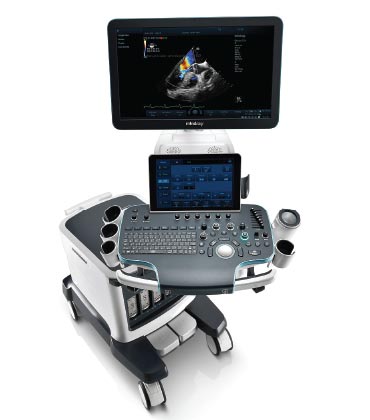
Butterfly Network is rewriting the rulebook for point-of-care diagnostics by making cutting-edge ultrasound technology accessible, affordable and efficient. It aids healthcare professionals worldwide with handheld, portable, cloud-connected ultrasound devices that offer crystal-clear imaging. Following a mission to democratize ultrasound and empower doctors, it delivers tools for hospitals and educational institutions to improve diagnosis, treatment and patient outcomes. Whether in emergency medicine, critical care, OB/GYN, or primary care, Butterfly’s probes provide precise, user-friendly imaging solutions. Compass, a device-agnostic ultrasound workflow solution, streamlines the integration of these devices within healthcare institutions. It ingests scans from Butterfly probes and existing ultrasound devices, ensuring seamless deployment. Key features include customizable worksheets, automated data transmission to EMR and PACS, and quality assurance and proficiency management tools. It also supports documentation, billing and governance. Analytics dashboards provide actionable insights to optimize point-of-care ultrasound (POCUS) programs. At the heart of Butterfly’s innovation are the flagship iQ3 and iQ+ ultrasound systems, redefining traditional medical imaging. iQ3, a third-generation probe, delivers twice the processing power of its predecessors. It offers superior image quality and unmatched diagnostic precision with full-body imaging capabilities, allowing clinicians to make rapid, informed decisions at the point of care. iQ+ probe, Butterfly’s second-generation model, provides a versatile, handheld solution for various specialties, including cardiology and obstetrics. It comes with several imaging modes, including B-Mode, M-Mode, Color Doppler, and Power Doppler. B-Mode (2-D) provides high-resolution, real-time imaging of anatomical structures. M-Mode offers detailed motion visualization within a single scan line, which is essential for assessing cardiac and fetal heart rates. Color Doppler visualizes blood flow by indicating velocity and direction, while Power Doppler highlights blood flow amplitude, showcasing areas of increased vascularity. Pulsed-Wave Doppler measures blood flow velocity at specific locations, aiding vascular assessments. Together, these features make the iQ+ system an essential tool across specialties. iQ+ Bladder automates bladder volume calculations in seconds, streamlining urological assessments. iQ+ Vet, a multi-species imaging solution for rapid, high-quality diagnostics in animals, extends this impact to veterinary medicine.
Medical Device Outsourcing

Bridging Production and Automation
Eric Huang, Engineering Manager, Alcon
Mobility Products

The Power of Smart Choices in Medtech Innovation
Jennifer Lazar, Global Director, New Product Management, BD
Physiotheraphy Solutions

Framing Futures: The Vital Role of Pediatric Imaging Innovation
Adam Christopher, Director of Cardiac MRI and CT, UPMC
Medical Products and Consumables

Lateral Cutaneous Neuropathy: Literature Review Update
Julio A. Martinez-Silvestrini, MD, FAAPMR, CAQSM, Medical Director, Baystate Health
Medical Products and Consumables

The Future of Outpatient Ambulatory Surgery: A Business and Site of Care Transformation
Luke Mitchell, Executive Director - Ambulatory Surgery, Lab, Imaging, Pathology, Prevea Health

IN MY OPINION
Packaging and Sterilization
R&D's Leadership Role Within The New Product Development Life Cycle
Dan Dror Siman-Tov, Senior Director of R&D, Meridian Bioscience

LAST WORD
Packaging and Sterilization
Revolutionizing Pediatric Care: How School-Based Healthcare is Changing Lives
Jennie Berkovich, DO, FAAP, VP of Physical Health, Hazel Health
IN FOCUS
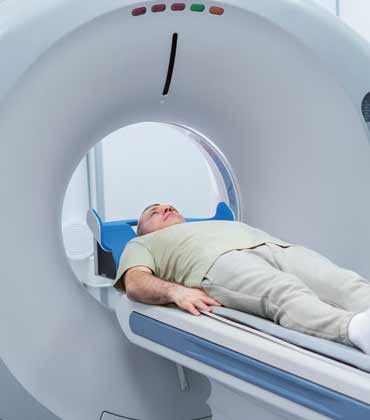
Transforming Imaging Experiences with MRI Video Systems
MRI video systems enhance patient comfort by providing distractions and reducing anxiety, leading to improved diagnostic accuracy and healthcare outcomes.

Navigating Change: The Future of Contract Packaging and Filling Services
The contract packaging and filling services sector is evolving in response to the demand for customized, sustainable solutions, while facing challenges such as regulatory compliance, cost pressures, and supply chain disruptions.
EDITORIAL
Diagnostics Innovation at Every Touchpoint
As hospitals embrace smarter infrastructure and imaging moves from centralized suites to the clinician’s pocket, the current diagnostic landscape is being redrawn to be faster and more accessible. With predictive analytics, IoT-enabled monitoring and data-driven planning taking center stage, hospitals are rethinking how technology infrastructure can adapt to rising patient volumes, tighter budgets and growing environmental pressures.
Clinical engineers are now seen as vital partners in creating diagnostic ecosystems that are efficient, resilient and patient-centered.
At the same time, the focus on patient experience is driving innovation inside the imaging suite. Next-generation MRI video systems are transforming what was once an intimidating process into a more comfortable, immersive experience. Beyond the hospital walls, point-of-care ultrasound (POCUS) is also breaking down barriers to diagnostic access. With portable, wireless probes, AI-guided image interpretation and seamless cloud integration, clinicians can deliver high-quality imaging anywhere, from emergency rooms to rural clinics and disaster response settings.
Driven by these trends, the medical devices market size is expected to reach $1.0225 trillion by 2028, growing at a CAGR of 6.34 percent.
This edition of the MedTech Business Review offers insights into the latest innovations in diagnostic technologies and how companies are aligning with these trends.
The magazine features a thought-leadership article from Luke Mitchell, Executive Director - Ambulatory Surgery, Lab, Imaging, Pathology at Prevea Health who examines the transformative shift of surgical procedures from hospitals to ambulatory surgery centers (ASC). Additionally, an article by Jennie Berkovich, DO, FAAP, Vice President of Physical Health at Hazel Health, explores how school-based healthcare is revolutionizing pediatric care by bringing medical and mental health services directly into schools.
In this edition featuring Top Contract Packaging and Filling Services 2025, Top MRI Video Systems 2025 and Innovative Point of Care Ultrasound Solution 2025, we hope you find the right partner to meet your organization’s needs.
