


Thank you for Subscribing to Med Tech Business Review Weekly Brief


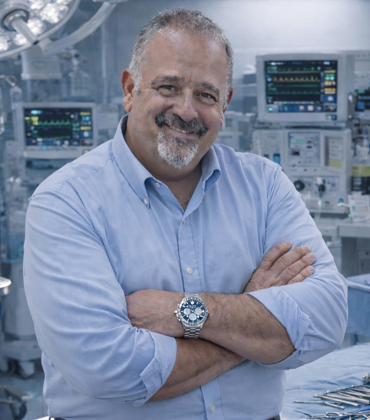 Dave Ganim, President and CEO
How One Entrepreneur Is Reshaping Healthcare Equipment While Investing in the Future
In today’s business environment, growth is often measured by acquisitions, revenue, and market share. Yet the most successful entrepreneurs understand that sustainable growth is built on something far more important: people, relationships, and a relentless commitment to creating value.
Few business leaders embody that philosophy better than Dave Ganim.
Over the past three decades, Ganim has quietly built one of the most influential organizations in the healthcare equipment industry. What began as a small medical equipment rental company while he was still a student at The Ohio State University has evolved into a diversified healthcare enterprise serving hospitals, surgery centers, physician offices, and veterinary facilities throughout the United States and abroad.
Today, as President and CEO of Ganim DRE, Dave Ganim finds himself leading one of the industry’s most impressive growth stories—one fueled by strategic acquisitions, operational excellence, and a team of dedicated employees who have helped transform a vision into reality.
A Career Defined by Reinvention
Many entrepreneurs spend their careers building a company. Few successfully sell a business, reacquire it, and then build it into something even larger.
After founding and growing Ganim Medical into one of the nation’s leading providers of refurbished medical equipment, Ganim sold the business in 2019. For many, that would have marked the pinnacle of a successful career. For Ganim, it became the beginning of a new chapter.
Recognizing opportunities in a rapidly evolving healthcare landscape, he returned to the industry with renewed energy and a broader vision. In 2022, he reacquired the company and immediately began executing an aggressive growth strategy centered around acquisitions, operational integration, and expanded service offerings.
What followed has been nothing short of remarkable.
Under Ganim’s leadership, the organization successfully acquired and integrated several respected businesses, including DRE Medical Group, DRE VET, Integrated Rental Solutions, Surgical Ops, Didage Sales, and Surgical Power. Together, these acquisitions created one of the most comprehensive healthcare equipment platforms in the country.
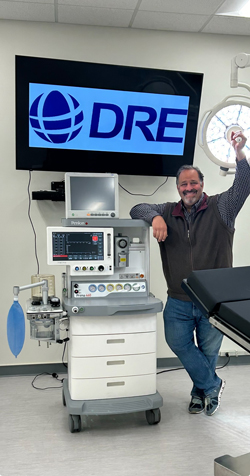 Perhaps the most transformative acquisition was DRE Medical Group, a company long recognized as one of the healthcare industry’s leading providers of new and private-label medical equipment. While Ganim Medical built its reputation around refurbished equipment, asset recovery, equipment lifecycle management, and helping healthcare providers maximize the value of existing investments, DRE excelled in delivering new equipment solutions and proprietary product lines.
The combination created a unique competitive advantage that few organizations in the industry can match.
The formation of Ganim DRE represented far more than the acquisition of a company—it was the merging of two highly complementary business models. DRE’s strength in new equipment and private-label products, combined with Ganim’s expertise in refurbished equipment, asset management, rentals, and biomedical services, created what many customers describe as the “best of both worlds.”
Rather than forcing healthcare providers to choose between new or refurbished equipment, Ganim DRE offers both. Hospitals, surgery centers, and healthcare organizations can now select solutions that best fit their clinical requirements, budget objectives, and long-term operational strategies. Whether a customer requires a fully equipped new operating room, a refurbished imaging suite, or a strategic combination of both, Ganim DRE can deliver a customized solution designed around their needs.
Today, that integrated approach continues to differentiate the company in the marketplace by providing greater flexibility, more purchasing options, and a single trusted partner capable of supporting virtually every aspect of a healthcare organization’s equipment needs.
Today, Ganim DRE offers an extensive portfolio of services, including new and refurbished medical equipment sales, biomedical engineering services, equipment rentals, logistics, software solutions, asset management programs, liquidations, and healthcare consulting.
The combined organization now operates from more than 250,000 square feet of facilities and supports healthcare providers throughout North America.
Creating Value in Healthcare
One of the defining characteristics of Ganim’s business philosophy has been his ability to identify opportunities others overlook.
Today, as President and CEO of Ganim DRE, Dave Ganim finds himself leading one of the industry’s most impressive growth stories—one fueled by strategic acquisitions, operational excellence, and a team of dedicated employees who have helped transform a vision into reality.
His company’s refurbished equipment programs routinely allow healthcare facilities to save hundreds of thousands—and often millions—of dollars compared to purchasing new equipment.
For surgery centers, those savings can be transformative.
Through Ganim DRE’s hybrid equipment model, facilities often reduce capital expenditures by 50 to 60 percent while maintaining access to high-quality equipment. In many cases, healthcare providers save between $700,000 and $1 million on equipment packages alone.
The company’s innovative Surplus Asset Management (SAM) program has become a powerful tool for healthcare systems seeking to unlock value from underutilized assets. By helping hospitals identify, manage, and monetize surplus equipment, Ganim DRE has helped organizations recover significant capital that can be reinvested into patient care and facility improvements.
This approach reflects Ganim’s long-standing belief that healthcare organizations deserve alternatives to costly replacement cycles.
Rather than simply selling equipment, his team focuses on helping customers maximize the value of existing investments while developing realistic long-term replacement strategies.
That consultative mindset has earned the company trust from healthcare systems nationwide.
Acquisitions with Purpose
While acquisitions often focus solely on expanding market share, Ganim approaches growth differently.
Each acquisition has been carefully selected to strengthen the organization’s ability to serve customers more comprehensively.
DRE Medical expanded equipment offerings and market reach.
DRE VET strengthened the company’s presence within veterinary medicine.
Integrated Rental Solutions broadened rental and asset management capabilities.
Didage Sales and Surgical Power added specialized expertise in equipment distribution, service, and repair.
The result is an organization capable of supporting customers throughout virtually every stage of an equipment lifecycle—from acquisition and deployment to maintenance, refurbishment, resale, and replacement planning.
This strategic integration has positioned Ganim DRE as a unique partner within the healthcare industry.
Rather than providing isolated solutions, the company delivers a complete ecosystem of services designed to improve efficiency, reduce costs, and simplify operations for healthcare providers.
Success Beyond Healthcare
Ganim’s entrepreneurial interests extend well beyond healthcare.
In recent years, he has become increasingly involved in one of America’s fastest-growing sports: Pickleball.
What began as an interest quickly evolved into a significant business investment.
Through facility development, ownership interests, sponsorships, and strategic partnerships, Ganim has become a recognized supporter of the sport’s continued growth. His organizations sponsor several professional pickleball athletes competing at the highest levels of competition while also supporting initiatives designed to expand participation and awareness of the game.
-
One of the defining characteristics of Ganim’s business philosophy has been his ability to identify opportunities others overlook.
As with healthcare, Ganim saw an opportunity where others saw an emerging trend. He recognized the sport’s extraordinary growth trajectory, broad demographic appeal, and ability to bring communities together.
His investments in pickleball reflect the same entrepreneurial instincts that have guided his healthcare ventures for decades: identify opportunity early, invest thoughtfully, and focus on long-term value creation.
The Team Behind the Success
Ask Dave Ganim about the company’s achievements, and he is quick to shift the spotlight away from himself.
While his leadership has undoubtedly guided the organization’s growth, Ganim consistently credits the dedicated employees who execute the vision every day.
Behind every successful entrepreneur is a strong support system, and for Dave Ganim, that person has been his wife, Sandi. Since the earliest days of the business, Sandi’s legal background has provided invaluable guidance as the company navigated contracts, acquisitions, partnerships, and the many complexities that accompany growth. While much of her contribution has taken place behind the scenes, her insight, sound judgment, and unwavering support have helped shape the foundation upon which the company was built.
As the organization expanded through multiple acquisitions and periods of rapid growth, Sandi remained a trusted advisor, helping ensure opportunities were pursued thoughtfully and strategically. Dave is quick to acknowledge that many of the company’s achievements would not have been possible without her partnership, encouragement, and steady influence throughout the journey.
Across sales, logistics, biomedical engineering, refurbishment, customer service, operations, finance, administration, and leadership, more than 100 team members contribute to the success of Ganim DRE and its affiliated companies.
The company’s rapid growth, acquisitions, and expansion efforts have required extraordinary commitment from employees willing to embrace change, integrate new organizations, learn new systems, and maintain exceptional service standards while continuing to exceed customer expectations.
Those efforts have not gone unnoticed.
Ganim frequently speaks about the importance of culture, accountability, and teamwork. He believes great organizations are built when talented people are empowered to solve problems, serve customers, and continuously improve.
Many employees have spent years growing alongside the organization, helping shape its culture and reputation. Others joined through acquisitions and quickly became indispensable members of the broader team.
Together, they have built an organization known not only for its industry expertise but also for its integrity, responsiveness, and commitment to customer success.
Their dedication has allowed the company to scale while preserving the personal relationships and service-first mentality that have always defined the business.
Simply put, the success of Ganim DRE is not the story of one individual. It is the story of a team of hardworking professionals, supported by strong leadership, family values, and a shared commitment to excellence, who work tirelessly every day to help customers succeed.
Looking Ahead
As healthcare continues to evolve, Dave Ganim sees tremendous opportunity ahead.
Healthcare providers remain under pressure to control costs, improve efficiency, and maximize the value of their capital investments. At the same time, emerging technologies, changing reimbursement models, and workforce challenges continue to reshape the industry.
Ganim believes organizations that focus on practical solutions, strong customer relationships, and operational excellence will continue to thrive.
For Ganim DRE, that means continued investment in technology, expanded service capabilities, strategic acquisitions, and ongoing support for customers seeking innovative ways to manage healthcare assets.
It also means continuing to invest in the people who have made the company’s growth possible.
After more than 30 years in business, Dave Ganim remains energized by the opportunities ahead.
His formula for success remains remarkably simple: identify opportunities, create value, build strong relationships, and surround yourself with great people.
It is a philosophy that has transformed a small startup into one of the healthcare equipment industry’s most respected organizations—and one that appears poised to drive the next generation of growth for years to come.
Selecting Medical Equipment Distribution Partners that Protect Capital and Care Readiness
Executives tasked with buying new and refurbished medical equipment are navigating a buying environment marked by tighter capital discipline, uneven lead times and greater scrutiny of total cost of ownership. The choice of equipment is no longer simply a matter of unit price. Hospitals, surgery centers, clinics and physician-owned facilities need devices that meet clinical use, room design, budget, timing and service expectations without creating avoidable disruption after installation.
The pressure is most visible when facilities expand procedure capacity, replace aging assets or equip new sites. New equipment may offer manufacturer backing and predictable specifications, while refurbished equipment can protect capital when sourced through disciplined inspection, testing and service processes. Many healthcare facilities have dealt with the same frustration. A system looks fine during procurement, then becomes difficult once it is actually in use. Installation takes longer than expected, servicing becomes a back-and-forth process and small operational issues start affecting staff routines. For hospitals and clinics already working around tight schedules, those problems add up quickly.
Stronger distributors distinguish themselves by the breadth and condition of their inventory. Buyers benefit when a partner can supply multiple modalities, match equipment to clinical workflow and provide both new and pre-owned options without forcing every decision into a single sourcing path. Inventory depth also matters because executives often need coordinated procurement rather than scattered purchases from isolated sellers. A distributor with ready access to equipment, instruments and related support can reduce search time, simplify vendor management and help planners make decisions across departments or sites.
[QUOTE1_Replace]
Service capability is equally important. Refurbished equipment must be more than used equipment presented attractively. It needs biomedical review, warranty coverage, delivery coordination and repair support that continue after the purchase. The market still includes independent sellers with limited geographic reach and inconsistent quality controls, so buyers should favor distributors that can back sales teams with technical resources, clear responsibility and accountable fulfillment. The best partners make the purchasing process easier for administrators while giving clinicians confidence that the equipment will perform as expected.
The final measure is fit with the buyer’s planning reality. Some organizations need turnkey help for surgery centers or equipment planners. Others need access to private-label products, rentals, volume programs or liquidation paths that convert surplus assets into purchasing flexibility. Executives should look for a distributor that combines field-level sales judgment with the scale to support multi-site needs, because medical equipment purchasing rarely ends at the point of sale. It extends into planning, delivery, installation, service and future replacement decisions.
Ganim Medical is a strong fit for organizations that need new and refurbished medical equipment supported by inventory depth, practical planning help and post-sale service. Its combination with DRE adds a broader supply base, including new products, certified refurbished equipment, rentals, installation support, technical support, training, preventive maintenance and warranty programs. Ganim’s 100,000-square-foot Ohio facility, DRE’s Louisville inventory base and its biomedical service team position it to serve hospitals, surgery centers, clinics, physician offices and veterinary providers with disciplined sourcing rather than one-off transactions. For executives balancing cost, readiness and accountability, Ganim Medical merits serious consideration.
...Read more
New and Refurbished Medical Equipment Distributors Info
Q1
What Do New and Refurbished Medical Equipment Distributors Help Healthcare Organizations Manage?
New and Refurbished Medical Equipment Distributors help organizations balance access, budget, timing, and lifecycle value when sourcing clinical equipment. The category covers new equipment, inspected pre-owned assets, refurbishment pathways, trade-in options, liquidation support, service coordination, and planning around replacement needs. It matters most when facilities need dependable equipment without treating every purchase as a full-capital replacement decision. A strong distributor can also help teams compare immediate needs with long-term asset use, so purchasing decisions are tied to function, not inventory pressure alone.
Q2
How Does Ganim Medical Support New and Refurbished Medical Equipment Distributors?
Ganim Medical supports New and Refurbished Medical Equipment Distributors through a model built around new and pre-owned equipment, asset management, trade-up programs, liquidation programs, and refurbishment of usable equipment. Its work also includes surgery center design and implementation, helping buyers connect procurement choices with space, workflow, and project timing. That mix gives the profile a clear equipment-distribution and lifecycle-management focus, especially where purchasing, resale, and reuse must work together.
Q3
What Should Buyers Evaluate When Considering Refurbished Medical Equipment?
Buyers should look beyond price and review condition, service history, warranty terms, delivery support, repair access, and whether the seller understands the intended clinical environment. New and Refurbished Medical Equipment Distributors are most useful when they make equipment selection practical, not just affordable. Clear documentation, responsive service channels, and realistic guidance on refurbishment limits help reduce procurement risk. Buyers also benefit when available inventory is explained in terms of use case, expected performance, and support requirements.
Q4
Why Does Service Matter in Medical Equipment Distribution?
Service matters because equipment value depends on uptime, safe use, and support after delivery. New and Refurbished Medical Equipment Distributors can strengthen purchasing decisions by pairing sales with service resources, parts knowledge, instrument support, and repair coordination. For refurbished equipment especially, buyers need confidence that the distributor can address performance issues and help keep assets useful over time. Service access also helps organizations avoid viewing refurbished purchases as one-time transactions with limited accountability.
Q5
Why Does Service Matter in Medical Equipment Distribution?
Service matters because equipment value depends on uptime, safe use, and support after delivery. New and Refurbished Medical Equipment Distributors can strengthen purchasing decisions by pairing sales with service resources, parts knowledge, instrument support, and repair coordination. For refurbished equipment especially, buyers need confidence that the distributor can address performance issues and help keep assets useful over time. Service access also helps organizations avoid viewing refurbished purchases as one-time transactions with limited accountability.
Q6
How Can Equipment Planning Improve Procurement Outcomes?
Equipment planning helps organizations match purchases to clinical needs, room design, budget limits, installation timing, and future replacement cycles. New and Refurbished Medical Equipment Distributors can add value by comparing new, pre-owned, and refurbished options within the same planning discussion. This approach can prevent rushed purchases, reduce surplus accumulation, and make medical equipment distribution part of a broader asset strategy. It also helps teams decide when to buy, trade up, repair, or liquidate equipment.
