


Thank you for Subscribing to Med Tech Business Review Weekly Brief
MedTech Business Review: Specials Magazine
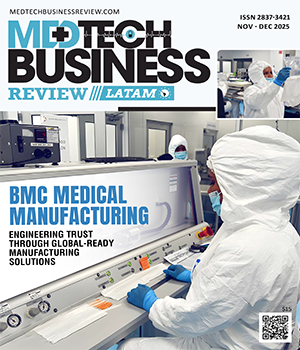
Medical device OEMs looking to nearshore their production no longer need to compromise between speed and global-grade rigor. BMC Medical Manufacturing has made that balance possible from Monterrey, positioning Latin America as a credible center for high-complexity medical device production. By bringing the discipline of global manufacturers together with the responsiveness of a nearshore partner, it delivers a standard that few can match. BMC is the only manufacturer in Mexico to operate under a full regulatory trifecta that includes ISO 13485 certification, FDA registration and GMP compliance with both Comisión Federal para la Protección contra Riesgos Sanitarios (COFEPRIS) in Mexico and Agência Nacional de Vigilância Sanitária (ANVISA) in Brazil. The recent achievement of ANVISA GMP elevates its relevance across the region. It differentiates them from other manufacturers, places them ahead of the ongoing COFEPRIS-ANVISA harmonization, and helps clients expand into Brazil and broader LATAM markets through one unified, audit-ready platform. Located just two and a half hours from the U.S. border, BMC’s facility gives OEMs an immediate strategic advantage. Proximity reduces logistical complexity, replacing month-long ocean freight with same-day land transit and bringing lead times down to under 24 hours. That pace is supported by a vertically integrated operation where design transfer, cleanroom assembly, packaging and sterilization sit within one controlled environment built to global regulatory expectations. By keeping every step on-site and tightly coordinated, BMC links OEM design teams with production in real time while giving clients continuous visibility and control. “When a client entrusts their device, they’re handing us their reputation and, ultimately, a patient’s safety. That is why we operate with global rigor while staying as close and responsive as a local partner,” says Mario Alberto Peña, General Manager of BMC Medical Manufacturing. Whether it’s a startup working toward its first approval or an established OEM managing complex product lines, BMC begins every project by stepping in as an extension of the client’s team. The early alignment allows its engineers to focus on the intent behind the device and work with OEM partners to translate complex designs into processes that hold up under real-world manufacturing and clinical conditions. Over time, this way of working has shaped what BMC calls ‘engineering trust,’ a culture grounded in Peña’s conviction that Mexican engineering could meet the world’s highest standards.
SR Productos para la Salud S.A. has anchored Latin America’s healthcare supply chain as the region’s leading syringe and needle manufacturer for over two decades. Its strength lies in turning industrial strategy into practical innovation, leveraging Paraguay’s Maquila Project to cut production costs and reinvesting those efficiencies into affordability. That model proved decisive during COVID-19, when SR supplied nearly all of Paraguay’s syringes, secured Brazil’s national tender and stabilized prices so vaccination programs could move forward without disruption. As part of the SR Group, alongside SR Saldanha Rodrigues LTDA, the company has expanded its portfolio well beyond syringes to critical disposables such as umbilical clamps, enteral adapters, collector bottles, caps and masks, all engineered to reduce infection risks and streamline clinical procedures. Every product is manufactured under internationally recognized quality standards and good manufacturing practices, ensuring consistency across markets. “Our mission is to make excellence attainable for every healthcare institution,” says Luiz Felipe Saldanha Rodrigues, vice president. “That means pairing world-class manufacturing with responsible pricing and the agility to deliver even in crisis conditions.” This means dependable supply and simpler procurement for hospitals and clinics. For patients, it translates into safer, less traumatic care experiences. Strategic Manufacturing Footprint SR’s dual-facility approach maximizes regional advantages. The Manaus plant in Brazil capitalizes on one of the country’s most cost-efficient manufacturing zones, while the Paraguayan operation benefits from South America’s lowest operational costs. This geographic diversification is about resilience. With its logistics fleet operating from Paraguay, SR maintains direct control over delivery timelines, a critical advantage when serving healthcare systems across Brazil, Argentina, Paraguay and beyond. The company’s adaptability extends beyond logistics. Each market receives products tailored to local specifications, from packaging requirements to regulatory standards. Whether supplying epidural anesthesia equipment for specialized procedures or veterinary health solutions for agricultural regions, SR adjusts its approach without compromising quality standards..

Rehabilitation Solution

DPE Medical is built on one simple truth—the world is not flat. To regain independence, patients must be able to navigate all types of surfaces. This isn’t just a slogan; it’s actually what ignites the foundation of DPE Medical. In the early 1990s, Daniel was diagnosed with Guillain-Barré syndrome. Completely paralyzed for months, he embarked on a long and grueling journey of rehabilitation. When he finally regained enough strength to walk with a walker, the medical team deemed him ready to return home. But at his doorstep, four simple stairs stood in his way. He could barely lift his foot two inches—let alone the six inches needed to climb them. The only solution available in the rehab clinic was a fixed six-inch wooden staircase. The problem and the available solution were one, and both out of his reach. Think about learning to shoot a basketball. If you’ve never touched a ball before, you wouldn’t start by attempting a three-point shot over and over, hoping for success. Instead, you’d start by dribbling, building strength, practicing close-range shots, and gradually working your way back. Physical therapy follows the same logic. Recovery happens in small, progressive steps, and stair rehabilitation should not be any different. Through his recovery, Daniel realized two critical things. First, existing rehabilitation equipment wasn’t designed to support patients through the full journey to independence. Second, the kindness of family, friends, and even strangers played a crucial role in his recovery. Inspired by this, he decided to dedicate his life to giving back—helping others overcome the same challenges he faced.
Devices and Equipment Manufacturing

Contribution of Nursing in Patient Care
Sandra Marcela Cortes Gomez, Chief Nurse Officer, Fundacion Santa Fe de Bogotá – Colombia
Devices and Equipment Manufacturing

The Ever-Evolving Healthcare Tech Landscape
Rodrigo Demarch, Chief Innovation Officer, Einstein Hospital
Drug Delivery Solutions

The Judicialization of Healthcare in Argentina
Francisco Clucellas, WEB Application Developer, Oracle APEX, Grupo OSDE
Dummy Sleep Training
Digitally Democratizing Healthcare
Felipe Cezar Cabral, Gerente Médico de Saúde Digital[Digital Health Medical Manager], Hospital Moinhos de Vento
Devices and Equipment Manufacturing

Rethinking Elder Care Through Essentials
Claudio Soto Angelo, Chief Medical Officer, Clínica Los Coihues

IN MY OPINION
Devices and Equipment Manufacturing
Laboratory Medicine: Efficiency as a Critical Factor for Market Survival
Justine Montalvao, Head of Enterprise Services Consulting LAM, Siemens Healthineers

LAST WORD
Drug Delivery Solutions
Maintaining Medical Devices: Ensuring Patient Safety
Dr. Haniff Murray, Clinical Engineer/Alternate Manager/Researcher, Memorial Healthcare System
IN FOCUS
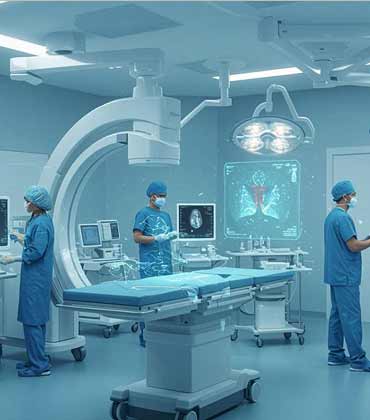
Latin America's Manufacturing Renaissance: A Focus on Medical Devices
Latin America's medical device manufacturing sector strengthens regional healthcare, creates jobs, and spurs innovation through localized production, regulatory alignment, and targeted partnerships, fostering inclusive and sustainable growth.

Shaping the Future of Medical Product Manufacturing in Latin America
The medical products manufacturing industry is evolving through technology, sustainability, and local production, with challenges and vast opportunities emerging.
EDITORIAL
Medical Innovation That Improves Access and Outcomes
A new wave of medical technology is transforming how care is delivered, measured and supported across hospitals, diagnostic centers and surgical environments throughout Latin America. Breakthroughs in precision manufacturing, connected medical devices and advanced materials science are enabling equipment that delivers more accurate results, greater reliability and safer outcomes for both patients and clinicians.
From AI-assisted diagnostic tools and miniaturized implantable sensors to smart sterilization systems and realtime performance monitoring, innovation is helping facilities enhance efficiency and elevate the standard of care across demanding clinical workflows.
These advancements are giving healthcare teams the ability to predict equipment performance, reduce downtime and strengthen safety. Predictive maintenance powered by IoT connectivity supports early detection of technical issues, while cloud-based platforms provide immediate visibility into device status and streamline service response. With automation reducing manual burden and new materials increasing durability and biocompatibility, medical products are moving toward a future defined by performance, traceability and longterm value.
In this edition of MedTech Business Review Latin America, the spotlight is on innovators designing smarter, safer and more accessible medical technologies that continue to improve clinical outcomes across the region.
This edition highlights leaders shaping the future of medical device innovation across Latin America. Dr. Haniff Murray, Clinical Engineer/Alternate Manager/Researcher at Memorial Healthcare System, stresses the essential role of rigorous maintenance and performance verification in protecting patient safety and ensuring reliable outcomes. Justine Montalvão, Head of Enterprise Services Consulting LAM at Siemens Healthineers, shows how intelligent manufacturing and connected device ecosystems improve quality, durability and access to life-saving equipment.
We hope this edition offers a closer look at how modern medical devices and thoughtful engineering are improving care, safety and trust inside hospitals and clinics. The progress shared here reflects a future built on reliability, compassion and smarter healthcare for every patient.
