


Thank you for Subscribing to Med Tech Business Review Weekly Brief
MedTech Business Review: Specials Magazine
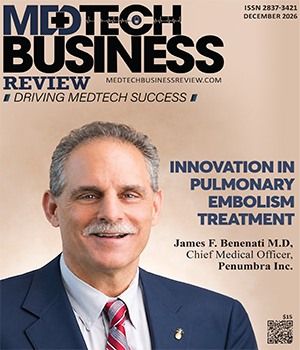
Acute pulmonary embolism (PE) is common, affecting more than 300,000 people in the U.S. each year. The severity of these blood clots in the lungs cannot be understated. They are complicated to diagnose – there are many variable clinical presentations— and, if not treated quickly, can at times be life-threatening. When I first became a practicing interventional radiologist 30+ years ago, treatment for PE was limited to anticoagulation therapy. This is still considered standard-of-care today. More recently, thrombolytic therapy has become common place for life threatening pulmonary emboli but this therapy comes with a host of potential complications. Patients may experience excessive bleeding and use of these thrombolytic agents also require stays in monitored care units or the intensive care unit (ICU). Over the past decade, advancements in technologies have allowed for the development of potentially more efficient clot removal methods for patients with pulmonary emboli that are causing severe symptoms such as shortness of breath
Contract Manufacturing Services
Medical device and biopharma innovators face increasing pressure to accelerate innovation, navigate evolving regulations, strengthen supply resilience and scale globally while meeting commercialization timelines. OEMs are also consolidating supplier bases, looking for strategic partners that can manage broader scopes and take greater responsibility for execution. Meeting these demands requires more than access to technology or manufacturing capacity. They need partners that manage complexity, anticipate risk and consistently deliver on commitments. Freudenberg Medical approaches contract manufacturing as a responsibility to carry innovations from development into dependable commercial production. Its vertically integrated CDMO model brings design, engineering, materials, quality and manufacturing teams together early, addressing clinical, technical, regulatory and production requirements concurrently rather than sequentially. This supports faster, more predictable execution. “Reliability is not only a quality metric for us. It is a strategic advantage,” says Mark Gomulka, President, Molding & Assembly business.

Medical Device Testing

Medical device innovation is advancing faster than regulatory guidance can always evolve. For companies developing wearable technologies such as pulse oximeters, cuffless blood pressure monitors, and other connected health devices, established standards may not fully answer the questions regulators raise. Vital Signs Research Group has built its approach around helping sponsors navigate this uncertainty by combining clinical testing expertise, regulatory insight, and efficient study execution. The company’s focus is not simply completing a test protocol. Instead, it works with medical device developers to understand what evidence regulators may expect, design studies that address those expectations, and recruit the specific patient populations needed to generate meaningful clinical data.
Medical Practices Accounting Software
During the height of the pandemic, Nitra was born from a fundamental realization: while doctors excel at patient care, many struggle with financial operations that hinder efficiency and growth. Jonathan Chen, Nitra’s CEO and a seasoned entrepreneur who previously took FiscalNote public saw these challenges up close. A family-run medical practice he encountered was bogged down by manual expense tracking, payroll errors, and paper-based workflows—issues that caused costly inefficiencies. As he explored further, he found that thousands of clinics faced similar hurdles, preventing them from scaling effectively. Despite advancements in AI-driven diagnostics and robotic surgeries, many healthcare providers remain stuck in outdated financial systems, drowning in paperwork that saps time and revenue. Chen recognized an opportunity to bring fintech innovation into healthcare, bridging the gap between clinical excellence and financial efficiency. “We built Nitra as an all-in-one platform to solve the financial and operational inefficiencies that burden healthcare providers,” says Chen. AI-Powered Expense Management: A Game Changer For years, medical offices have relied on outdated methods to track expenses—saving receipts, manually entering data into QuickBooks, and reconciling accounts at the end of each month. This process is not only inefficient but also prone to costly errors. Nitra eliminates inefficiencies by automating expense management and keeping you organized throughout the payables process. Its AI-powered system tracks, categorizes, and syncs expenses with accounting software. Office managers can snap a photo of a receipt, and Nitra’s computer vision extracts key details, reconciles transactions, and automates month-end processing—eliminating manual data entry. Beyond automation, Nitra enhances financial intelligence with innovative cost-saving tools, including the Nitra Practice Expense Card— designed specifically for medical professionals who spend hundreds of thousands monthly on supplies, injectables, and essential drugs. The card offers 2.2 per cent cash back on all purchases and 3 to 5 per cent cash back on select speciality items such as Botox for dermatology practices. A clinic spending $100,000 monthly on injectables could translate into thousands of dollars in cashback—funds that can be reinvested into patient care and practice growth. Nitra also helps clinics optimize costs through real-time price comparisons. When a clinic uploads a receipt, the platform instantly checks the prices of purchased items against those paid by other practices in its network. If a better deal is available, Nitra alerts the doctor and suggests alternative vendors—enabling smarter purchasing decisions. Importantly, all data remains anonymous, ensuring privacy while fostering transparency and fair pricing across the industry.

Ultrasound Disinfectant Wipe

Practical Point Of Care Testing
Deb Lacava, Director Of Laboratory Services , University Medical Center of Southern Nevada (UMC)
Manufacturer Services

Modular Approach For Large Scale Cell Culture CDMO Facilities
Jacob Gronnegaard, Director Automation, FUJIFILM Diosynth Biotechnologies
Hospital Services

Finding Compassion: Navigating The Complexities Of Emergency Department Care In Modern Healthcare
Pat Jackson, Director, Patient Experience & Advocacy, Huntsville Hospital
Medical Device Testing

How Nurses Can Sustain Hospitals Amid Reimbursement Challenges
Justin Floyd, Director of Nursing- Critical Care Service Line, Peace Health
Hospital Services

The Human Factor In A Tech Savvy World
Marty Gregory, Radiology Manager, Knoxville Orthopaedic Clinic

IN MY OPINION
Medical Products and Consumables
Three Decades of Engineering Leadership from Development to Launch
Mark Hickson, Director, Research & Development, Leica Biosystems

LAST WORD
Supplies
Use AI To Improve The Conversation
Domenico Savatta, Director of Urologic Surgery, Newark Beth Israel Medical Center
IN FOCUS
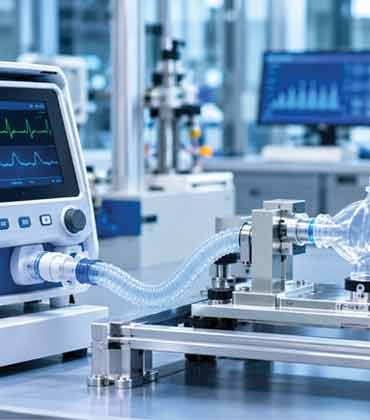
Medical Device Testing: Advancing Quality Through Technology and Compliance
Medical device testing services improve device reliability, support confidence in product quality and safety and help validate product performance.

Medical Manufacturing Services: Improving Production Control and Product Reliability
Medical contract manufacturing improves medical product development through validated production, quality control, supply planning, automation, traceability and engineering expertise.
EDITORIAL
Building Reliability in Medical Technology Advancement
Medical technology advancement requires translating complex design into reliable manufacturing and robust operation amid increasing regulatory pressure. This edition of MedTech Business Review explores modular manufacturing systems and dedicated clinical testing, which enhance supply reliability and the creation of evidence within medical device and biopharma pipelines.
Freudenberg Medical, recognized as Top Medical Contract Manufacturing Services 2026, uses a vertically integrated contract development and manufacturing organization process where design, materials science, engineering and manufacturing all occur in concert. This method minimizes hand-offs and leverages proprietary capabilities like LUBRITEQ hydrophilic coating and CleanAssure services at twelve global locations. Consistency, thus, becomes a tool of strategy and not an end result, allowing OEMs to scale their complex medical devices more reliably. Vital Signs Research Group, named Top Medical Device Testing Services 2026, adds to this structure by designing tests that meet the FDA requirements for wearables such as pulse oximeters and continuous blood pressure monitoring devices. Using targeted patient selection, data verification and protocol changes due to different skin colors and physiological factors, the company provides the necessary data for regulatory purposes.
Jacob Gronnegaard, Head of Automation at FUJIFILM Diosynth Biotechnologies, discusses how the KojoX modular design approach uses uniform designs, the same type of machinery, and automated codes to create uniformity in drug substance modules, thereby reducing the design cycle and making multi-site startups easier. Deb LaCava from University Medical Center of Southern Nevada emphasizes the need for point-of-care testing since it is a faster way of getting bedside results whenever there is an urgent need for the test and when the added expense can be justified.
The importance of leadership focused on standardization of processes, anticipation and risk management cannot be understated when discussing the development of future treatments. Explore the edition further to examine these practical strategies and the operational choices shaping reliable medical technology delivery.
