


Thank you for Subscribing to Med Tech Business Review Weekly Brief
MedTech Business Review: Specials Magazine
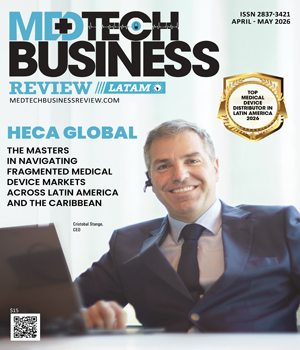
Why do fragmented regulatory and healthcare systems challenge medical device expansion in Latin America? For medical device manufacturers, Latin America and the Caribbean remain a mosaic of distinct healthcare operating environments. Each jurisdiction is defined by independent regulatory systems, reimbursement structures, import-export requirements, fluctuating currencies, clinical practices, and healthcare protocols. Manufacturers face the persistent challenge of navigating fragmented systems with different marketing strategies and inconsistent execution standards. Heca Global, a medical device distributor, transforms fragmentation into strategic leverage to bring medical device manufacturers’ innovative products and breakthrough technologies to the market. It creates economies of scale across dispersed Latin American micro-markets. It maintains on-the-ground operations in each market throughout Latin America and the Caribbean, including the small, remote and traditionally underserved markets. Through a coordinated, highly specialized staff with deep clinical expertise. The team ensures each medical device innovation delivers optimized clinical outcomes and earns long-term professional trust. By synchronizing regulatory management, reimbursement strategy and physician education across geographies, along with the financial and operational aspects, Heca converts structural dispersion into operational efficiency. “We have mastered how to serve in a complex landscape. Manufacturers trust us because they see our commitment. They see how our diversified geographical coverage translates into unique economies of scale with a genuine local expertise,” says Cristobal Stange, CEO. The model was not incidental. Prior to starting the company in 2009, while supporting multi-country operations at Medtronic in Europe and based in Switzerland, Stange saw how coordinated regional execution could outperform fragmented local efforts. ”The European landscape is similar to Latin American,” Stange adds. “Multiple jurisdictions, multiple settings. But on the other side medical devices are so clinically deep, so technically complex, that it pays off to have a centralized high calibre team.” With that vision, he set out to build a geographically diversified platform across Latin America. Despite its bureaucratic dispersion and structural complexity, the region was a deliberate choice and formed the founding strategy.
Medical Suppliers and Distributors
Infections may spread in mere seconds, but Patient Shield Concepts is matching that pace with swift, preventative solutions. Founded by anesthesiologist, MD, and CMO, Dr. Lynn White and Dr. Stanley Rosen, the company addresses a pressing issue in acute care settings: stopping the cross-contamination of bacteria and viruses from contaminated suction implements. Determined to break this cycle of contamination, Dr. White and her team developed SuctionShield, a simple and effective holster that keeps suction implements off contaminated surfaces and out of harm’s way. By reducing cross-contamination risks, Patient Shield Concepts is creating safer environments for both patients and healthcare providers. “SuctionShield holsters provide infection control by reducing cross contamination at the bedside, providing a safe, identifiable storage space for used suction implements,” says Dr. White. SuctionShield: A Simple Solution to a Critical Infection Control Risk The concept behind SuctionShield emerged in the operating room, where suction devices used in patients’ oral and respiratory tracts were routinely placed on contaminated surfaces—under pillows, alongside ventilators, or even on the floor—before being reused. Research shows that many suction implements in acute care can harbor various pathogens, including bacteria and viruses capable of surviving on dry surfaces for extended periods. These pathogens can spread easily as healthcare staff move between rooms, often carrying microbes on their clothing or arms. SuctionShield was developed to address this frequently overlooked yet critical problem. Initially designed for operating rooms, its effectiveness quickly caught the attention of clinicians across the healthcare spectrum, leading to broad adoption in ambulances, emergency departments, ICUs, and step-down units. Engineered for single-patient use over a 24-hour period, this straightforward holster isolates potentially contaminated suction devices, making them easily identifiable while significantly reducing cross-contamination risks. With its bright orange color, SuctionShield stands out in high-traffic clinical settings, and its sturdy, re-attachable construction remains secure until deliberately removed. A gridbottom design allows suction tips to air-dry completely, helping inhibit microbial growth. Made from disposable and recyclable materials, SuctionShield strengthens infection control and supports broader sustainability efforts.

MRI Video Systems

Whether it’s a routine checkup or a serious condition, MRIs can be a major source of stress for patients. The tight space, loud noise, and enclosed environment often trigger discomfort, movement, claustrophobic reactions, and even missed appointments. For healthcare providers, these issues disrupt workflow, compromise image quality, and increase operational costs. Patient comfort isn’t a luxury—it’s a workflow imperative. Reducing anxiety leads to higher first-time scan success rates, fewer costly rescans, and improved throughput. Clinics that prioritize comfort benefit from greater efficiency, higher patient satisfaction scores, and a stronger reputation. By supporting technologists and minimizing emotional strain, comfort-focused imaging environments offer a practical solution to operational bottlenecks. UX Platforms addresses both patient experience and operational efficiency with an in-bore projector that displays calming visuals during scans. Positioned just two feet behind the MRI, it helps distract patients, reduce motion, and improve scan quality. As a result, providers experience fewer rescans, lower staff burnout, and increased patient retention. “Calm minds, clear images,” says CEO Simon Whalen. “Our in-bore video system has shown to enhance scan quality and workflow efficiency through real-world results.” At one small, family-owned outpatient center, implementing UX Platforms’ base projector led to an 87% reduction in claustrophobia-related cancellations and virtually eliminated rescans. Building on that success, UX Platforms introduced CineMode—an attachment that clips onto the bed rails and moves with the patient into the bore, displaying scenic documentaries, proprietary drone footage, and children’s cartoons. Technologists can deploy story-driven content without polling patients, making it ideal for high-throughput days. For added flexibility, CineMode Plus enables streaming from any HDMI-compatible device. Patients can bring their own content, or clinics can stream services like Netflix, Disney+, or Hulu via a laptop or streaming stick. This has proven especially effective for pediatric and sedation-sensitive cases.
Digital Dental Sleep Orthotics Solution of the Year in Latin America 2026
Why does dental sleep care require interdisciplinary precision and coordination? Dental sleep care sits at the intersection of dentistry and medicine, where airway health, joint stability, and long-term patient compliance must align for treatment to succeed. Every patient deserves precise care that goes beyond just fitting an appliance—it's about crafting a solution that enhances their quality of life and well-being. This is where Diamond Orthotic Lab plays a pivotal role. Each case relies on meticulous records, clear therapeutic intent, and personalized fabrication that reflect each patient's clinical reality. Early decisions shape outcomes, timelines, and patients' confidence in their treatment, well before an appliance reaches them. “We don’t just manufacture appliances. The real value is helping clinicians reduce variability and achieve predictable outcomes. At the end of every device is a patient, and that responsibility drives everything we do,” says Matt Rago, CEO and co-founder.

Medical Equipment Suppliers and Distributors

Understanding Supply Chain Management
Janie Garcia, Manager Supply Chain System, Baylor Scott & White Health
Medical Suppliers and Distributors

Optimizing Healthcare Procurement and Supply Chain Management
Cesar A. Roman, Director of Strategic Sourcing and Procurement Operations, University Health
Medical Suppliers and Distributors

Primary Health Care Management in the Latin American Region
Daniel Greca, Business Unit Director Population Health Management, Hospital Sírio-Libanês
Medical Device Testing
The Pulse of Profit: How Planned Obsolescence is Infecting Medical Tech
Damion Schinnerer, Director of Operations (Capital/Contracts), Community Hospital Corporation
Medical Suppliers and Distributors

Navigating the Credentialing and Workforce Challenge
Dr. Tyree Davis, Chief Medical Officer for Ancillary Services, Nevada Health Centers, Inc

LAST WORD
Medical Device Outsourcing
Bridging Production and Automation
Eric Huang, Engineering Manager, Alcon
IN FOCUS

Healthcare Partners: The New Wave of Medical Device Distribution in Latin America
Medical device distributors in Latin America are evolving into strategic healthcare partners through operational sophistication, regulatory expertise, and technology-enabled resilience.
EDITORIAL
Executing MedTech across Fragmented Markets
Medical technology adoption in Latin America is not constrained by innovation capacity, but by execution realities. Regulatory divergence, uneven access, and operational fragmentation continue to define how, and how quickly, innovation reaches clinical environments. In this context, scale is not achieved through product superiority alone, but through the ability to operationalize across markets that function differently at every level.
This edition of MedTech Business Review Latin America examines how organizations are addressing these constraints with structured, execution-led strategies grounded in local market understanding.
Heca Global, recognized as the Top Medical Device Distributor in Latin America 2026, reflects this shift from distribution to orchestration. Operating across Latin America and the Caribbean, the company has developed an integrated model that aligns regulatory navigation, clinical education, reimbursement strategy, and commercialization into a single execution framework. Its approach is selective and disciplined, prioritizing clinically validated technologies and supporting adoption through coordinated engagement across providers, payers, and regulators. The outcome is not just market entry, but sustained utilization and measurable clinical impact.
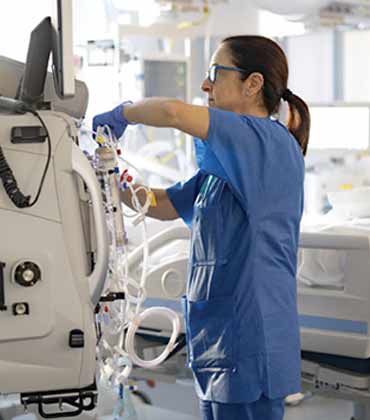
From a systems perspective, the conversation is increasingly shifting toward structural risk within healthcare delivery. Damion Schinnerer, Director of Purchased Services & Capital Equipment at Community Hospital Corporation, points to the growing implications of planned obsolescence in medical technology, where software constraints and proprietary ecosystems extend lifecycle costs and limit operational flexibility. His perspective calls for a recalibration of technology strategy toward long-term clinical utility rather than short-term vendor dependency.
Complementing this, Cesar A. Román, Director of Strategic Sourcing and Procurement Operations at University Health, outlines a procurement model that moves beyond reactive cost control. By leveraging predictive analytics, supplier diversification, and AI-enabled forecasting, organizations are building resilience into supply chains while maintaining care quality and financial discipline.
Taken together, these perspectives point to a clear inflection point. The next phase of medtech growth in Latin America will not be defined by access to innovation, but by the ability to execute within complexity, align stakeholders, and sustain outcomes over time.
