


Thank you for Subscribing to Med Tech Business Review Weekly Brief
MedTech Business Review: Specials Magazine
![Globus Medical [NYSE: GMED]: Transforming Lives through Medical Innovation](https://www.medtechbusinessreview.com/newstransfer/upload/01-uq9uj.jpg "Globus Medical [NYSE: GMED]: Transforming Lives through Medical Innovation")
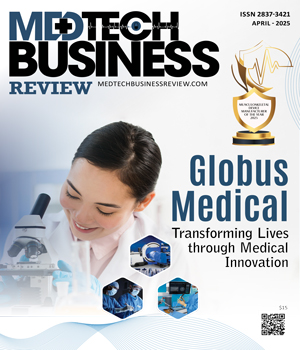
Advancements in prosthetics and orthotics are redefining human mobility and functionality through innovations. They are instrumental in restoring lost capabilities and pushing the boundaries of physical rehabilitation, enabling individuals to pursue more active and fulfilling lifestyles. This drives a new era of potential for those in need. Globus Medical is leading the charge in the field of musculoskeletal systems, specializing in the development of medical devices for prosthetics and orthotics to improve patients’ quality of life. The company’s exclusive attention to advancing surgical practices has positioned it as the fastest-growing company. Its dexterity to innovate and deliver exceptional clinical support steers it ahead of the competition in the healthcare industry. Its services comprise an impressive array of spine products, including anterior and posterior cervical and lumbar, HEDRON 3D printed titanium interbody spacers and expandable technology. These address various spine ailments, including degenerative conditions, deformity, tumors and trauma. The company also develops solutions for interbody fusion, corpectomy and interspinous fixation, which allow for intraoperative customization per patient’s anatomy and can help save surgical time by eliminating progressive testing. “With a relentless focus on changing patient lives, we’re combining our differentiated portfolios and talented teams to reach more customers as we advance spine and orthopedic care globally,” says Daniel Scavilla, president and CEO. Globus Medical’s proficiency is rooted in understanding the needs of surgeons and patients alike, ensuring that its products meet the highest standards of quality and effectiveness. Advancing Surgical Precision And Patient Care A standout feature of Globus Medical is its Excelsius Technology, which seamlessly integrates robotics and navigation to improve surgical precision and efficiency. This cutting-edge system comprises ExcelsiusGPS and Excelsius3D. The ExcelsiusGPS technology incorporates a powerful robotic arm and full navigation features to significantly improve surgical accuracy, particularly in spine and cranial procedures, ultimately enhancing patient care. Excelsius3D functions as an advanced imaging unit, providing automatic image registration and consolidating imaging modalities into a single system, facilitating adaptable and navigable multidisciplinary procedures. In one instance, a young woman diagnosed with lipomyelomeningocele, a severe form of spina bifida, faced chronic pain that left her bedridden despite undergoing numerous surgeries that failed to alleviate her condition. Johns Hopkins Hospital used Globus Medical’s ExcelsiusGPS to perform a total vertebral body resection, which resulted in the shortening of the spinal column and alleviation of tension in her spinal cord. This surgical intervention had a life-changing impact as it significantly improved her quality of life post-surgery, allowing her to walk pain-free after years of suffering.
MRI systems are indispensable in medical diagnostics, serving as the backbone for accurate and timely medical intervention. But when these essential tools malfunction, repairing them is no child’s play. Given the high cost of MRI systems, rushing into costly replacements instead of targeted repairs can put significant financial strain on medical facilities. To prevent unnecessary expenses and minimize downtime, expert insight is essential in pinpointing the root cause and ensuring only necessary repairs are made. Here, MRI Coil Guru stands as a leader in MRI coil repair with 80 years of experience and expertise under its hood. The company’s team of engineers and other specialists are among the best in the field, renowned for their unmatched skills. “We tackle industry challenges headon by combining technical expertise with a commitment to knowledge transparency and superior customer service,” says Chavis Thomas, managing partner. “We’ve built a reputation for smooth operations ensuring minimal downtime and no stress.” A recent client success story underscores MRI Coil Guru’s expertise and impact in providing top-tier services. Dr. Manos Stavroulis, an interventional radiologist, had a very hard time locating parts for his MRI system. The limited availability and high costs made the parts almost unattainable, until he stumbled upon MRI Coil Guru while surfing the web. From the initial get-go, Dr. Stavroulis received prompt response from the team. As he puts it, “since the first email with MRI Coil Guru, I understood how serious and professional they are, so I sent them two coils to be repaired right away.” In a remarkably short timeframe, the coils were shipped, evaluated, repaired and returned in perfect condition. .

Innovative Point of Care Ultrasound Solution
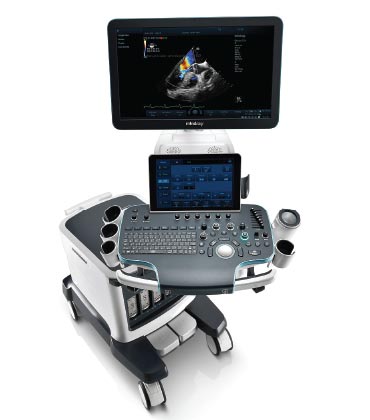
Butterfly Network is rewriting the rulebook for point-of-care diagnostics by making cutting-edge ultrasound technology accessible, affordable and efficient. It aids healthcare professionals worldwide with handheld, portable, cloud-connected ultrasound devices that offer crystal-clear imaging. Following a mission to democratize ultrasound and empower doctors, it delivers tools for hospitals and educational institutions to improve diagnosis, treatment and patient outcomes. Whether in emergency medicine, critical care, OB/GYN, or primary care, Butterfly’s probes provide precise, user-friendly imaging solutions. Compass, a device-agnostic ultrasound workflow solution, streamlines the integration of these devices within healthcare institutions. It ingests scans from Butterfly probes and existing ultrasound devices, ensuring seamless deployment. Key features include customizable worksheets, automated data transmission to EMR and PACS, and quality assurance and proficiency management tools. It also supports documentation, billing and governance. Analytics dashboards provide actionable insights to optimize point-of-care ultrasound (POCUS) programs. At the heart of Butterfly’s innovation are the flagship iQ3 and iQ+ ultrasound systems, redefining traditional medical imaging. iQ3, a third-generation probe, delivers twice the processing power of its predecessors. It offers superior image quality and unmatched diagnostic precision with full-body imaging capabilities, allowing clinicians to make rapid, informed decisions at the point of care. iQ+ probe, Butterfly’s second-generation model, provides a versatile, handheld solution for various specialties, including cardiology and obstetrics. It comes with several imaging modes, including B-Mode, M-Mode, Color Doppler, and Power Doppler. B-Mode (2-D) provides high-resolution, real-time imaging of anatomical structures. M-Mode offers detailed motion visualization within a single scan line, which is essential for assessing cardiac and fetal heart rates. Color Doppler visualizes blood flow by indicating velocity and direction, while Power Doppler highlights blood flow amplitude, showcasing areas of increased vascularity. Pulsed-Wave Doppler measures blood flow velocity at specific locations, aiding vascular assessments. Together, these features make the iQ+ system an essential tool across specialties. iQ+ Bladder automates bladder volume calculations in seconds, streamlining urological assessments. iQ+ Vet, a multi-species imaging solution for rapid, high-quality diagnostics in animals, extends this impact to veterinary medicine.
Medical Suppliers and Distributors

Medical Equipment Support Contracts: Creating Your Own Value Equation
Scott Bosch, Director, Clinical Engineering, HealthPartners
Drug Delivery Solutions

Maintaining Medical Devices: Ensuring Patient Safety
Dr. Haniff Murray, Clinical Engineer/Alternate Manager/Researcher, Memorial Healthcare System
Ultrasound Disinfectant Wipe

Practical Point Of Care Testing
Deb Lacava, Director Of Laboratory Services , University Medical Center of Southern Nevada (UMC)
Maintenance and Repair Services

Enhancing Chronic Care Management In Hospital Operations
Dino Scanio, MPH, Multiservice Hospital Director of Clinics, Driscoll Children’s Hospital
Maintenance and Repair Services

Setting New Standards In Imaging Services
Dawn Mcdaniel, Manager Of Imaging Services, Nuclear Medicine, MRI And Diagnostic Surgical Services, Summa Health
Packaging and Sterilization

R&D's Leadership Role Within The New Product Development Life Cycle
Dan Dror Siman-Tov, Senior Director of R&D, Meridian Bioscience
Maintenance and Repair Services

Battlefield To The Bedside: 8 Military Skills That Transition To Surviving As A Healthcare Leader
Dan Mather, MSN, RN, Director of Clinic Operations, Salina Regional Health Center

IN MY OPINION
Maintenance and Repair Services
Enhancing Interventional Radiology: The Advantages of a Hybrid IR/CT Suite
Mario Pistilli, Executive Director, Imaging Services, Children's Hospital Los Angeles

LAST WORD
Maintenance and Repair Services
Titus Regional Medical Center's Journey on Implementing CT Dose Tracking and the Effects of Newer Technology
Bill Saling, Director of Imaging Services, Titus Regional Medical Center
IN FOCUS
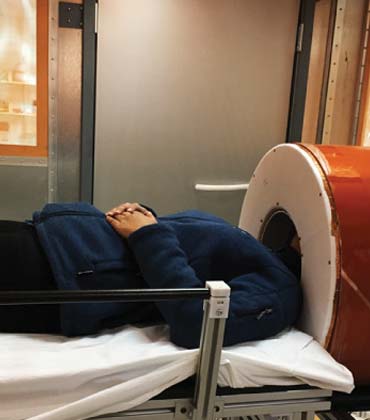
Future-Proofing MRI Systems: The Importance of Coil Maintenance and Repair
Magnetic Resonance Imaging (MRI) is crucial in healthcare, providing critical diagnostic and monitoring capabilities for various health conditions.
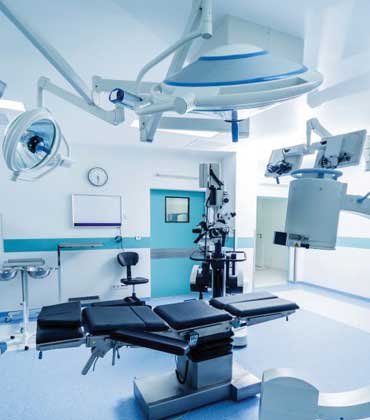
Ensuring Patient Safety Through Effective Medical Equipment Maintenance
Maintaining medical equipment is essential for patient safety and efficiency. Prioritizing maintenance improves outcomes and protects healthcare resources.
EDITORIAL
Ensuring Efficiency in Medical Equipment Maintenance
The reliability of medical equipment is critical to patient care, making maintenance services essential for healthcare facilities. With hospitals and clinics relying on a range of diagnostic and treatment devices, the demand for preventive and predictive maintenance has increased. Studies indicate that proactive servicing can reduce unexpected equipment failures by up to 50%, minimizing downtime and improving patient outcomes. The integration of IoT-based monitoring allows for real-time data collection, enabling timely interventions and cost savings for healthcare providers.
In musculoskeletal care, advancements in medical devices are transforming treatment and recovery. Smart implants provide physicians with continuous patient data, helping optimize rehabilitation and improve long-term mobility. These innovations support the growing need for personalized and remote healthcare solutions.
Point-of-care ultrasound (POCUS) technology is also evolving, offering portable and accessible imaging options for various clinical settings. Companies have introduced handheld ultrasound devices that integrate with smartphones, expanding the use of imaging in emergency rooms, rural clinics and home healthcare. While these developments increase diagnostic efficiency, challenges such as training and image optimization remain to be addressed.
With continuous innovation and improved maintenance strategies, the medical technology sector is enhancing both patient care and operational efficiency, ensuring that healthcare facilities can deliver reliable, high-quality services.
This edition of MedTech Business Review delves into the latest innovations shaping the industry. It includes a thought leadership article from Mario Pistilli, Executive Director of Imaging Services at Children’s Hospital Los Angeles, who explores the transformative benefits of a hybrid IR/CT suite in enhancing interventional radiology. It also has insights from Bill Saling, Director of Imaging Services at Titus Regional Medical Center, who highlights the hospital’s journey in implementing CT dose tracking and the significant impact of newer dose reduction technologies on patient safety and radiation exposure.
In this issue, we also spotlight the top companies in MRI coil repair services, musculoskeletal device manufacturing and innovative point-of-care ultrasound solutions. We hope this guides healthcare facilities in selecting the right partners to advance their strategies.
